Showing posts with label Safety. Show all posts

Friday, July 18, 2014

School Evacuation...You Never Know When...?


School Gas Leak Incident: (Derby, Connecticut) At approximately 9:53 am on Thursday July 17th, Derby High School was evacuated due to a natural gas leak reported at the school. 911 was called so the Police Department and Fire Department were dispatched and responded as the school was being evacuated to an adjacent school, Derby Middle School.  The School Superintendent issued a press release stating that all emergency procedures were followed by the school and no one was injured with school resuming operations later that afternoon.


Cause of Gas Leak: An extermination company (a third party contractor) was drilling into the foundation outside of the school and possibly ruptured the gas line according to media reporting. At present it is believed that the workers reported the gas leak to school officials who activated 911 response while evacuating the school.  

Points for Consideration / Discussion

  • School incidents can occur at any time, when you least expect it, and can be when it is most inconvenient. (During summer school, adult education classes in the evening, during a parent teacher conference, during a school play, band competition, or an indoor or outdoor sporting event.) 
  • Typically one of the school administrators are responsible for the oversight of the cleanliness and maintenance of school facility and should be kept apprised of all work done on, in, or outside of the school. 
    • Those functions have impacts on deliveries (routine or not routine), IT installations, repairs and maintenance, alarm systems and camera repairs or upgrades, snow removal or salting, and landscaping. Those activities can result in people not normally associated with the daily functioning of the school to have access to the school facility or exposure to underage student body which should be a security consideration
    • The School Administrator who is responsible for the facility, should always discuss and maintain situational awareness of work to be done with their Head Custodian or Head Facilities worker at the school. That school administrator should ask basic supervisory questions of any maintenance activities that will take place. IF digging is to take place, everyone should ask "Who notified the utilities company to ensure it is safe to dig, before we dig?" This isn't micromanagement but responsible supervision by query.
  • Typically when the school is operating outside of the standard school schedule (summer, after school hours, nights, and weekends), there is not as many supervisors or as much emphasis placed on safety and security. It is important to not confuse enthusiasm with capability here. Part of any event should be a discussion with all participants on Evacuation, Lock Down, Lock Out, and Shelter in Place. This should be followed by a drill or walk through / talk through rehearsal. 
  • Being aware in an "olfactory" way: Anything that smells out of the ordinary should be reported immediately. A gas leak or an electrical fire are often identified by an unusual smell first. A gas leak by an HVAC (Heating, Ventilation, and Air Conditioning) intake valve could send natural gas or fumes throughout a facility rapidly. 
  • May people feeling sick at once. Or if numerous occupants of the building feel dizzy, light-headed, or have headaches; this needs to be reported immediately. If a school nurse or trainer is present, multiple people complaining of those ailments should trigger your reporting and possible recommendation to evacuate to get fresh air. 
  • Remember, anyone can and should call 911 if there is a security or safety threat. Never assume someone else did. 
  • How would an evacuation go during:
    • Summer School ? Summer Academy?
    • Indoor School Graduation?
    • Parent Teacher Conferences at Night?
    • Friday Night Basketball Game with a packed gym?
    • After school program at your school?  
  • Some Other Helpful Questions for Incidents at Off Peak Hours:
    • During school off hours, who specifically is in charge of everyone else? 
    •  Who is the person in charge of conferring with First Responders when they arrive. 
    • Does the person who is in charge, know they are in charge? Do they know their role during an incident?
    • Does part of their (non school district organizations) Memorandum Of Understanding (in the case of an after school or community program use of the school) require them to notify anyone in the School District Central Office if an incident occurs? 
    • Who (specific persons) do they notify and how (specific contact information during the off hours)?

Could this incident have been prevented? If a gas line was ruptured during indoor or outdoor drilling, then the answer is YES. Conferring with the public utility company or building engineer (indoor work) prior to any digging can identify no-drill areas for safety purposes. 

While the incident in Derby was minor, what if there had been an explosion and injuries? The same type of questions (see above) would be asked during an investigation, and most likely during a cross examination in a criminal trial or civil suit so they are worthy of consideration know.

It is about Preparation, nor Paranoia. Prevention is so much better than a well executed Response. 

Saturday, July 12, 2014

Schools with Pools: Risks and Hazards...Who Knows What They Are?


NOT A GRAPHIC ANY ORGANIZATION WOULD WANT TO SEE ON THE NEWS

Many educational institutions, both public and private, have swimming pools and they are a vital part of the school community. Whether they are used for swim teams, swimming lessons (essential life skill), or other appropriate aquatic activities they are important to the educational process.  There are hazards associated with pools that schools need to assess to first protect LIFE, next protect School Operations (including aquatic activities), and then protect the School Facility (safe use of the pool facility). 

RISK MITIGATION: There are enhanced RISKS associated with a school pool that can be mitigated if you are aware of the Hazards. Those hazards are drowning; shallow water blackout (hyperventilating and then holding breath during long underwater swims); slips, trips, and falls (running around a pool with wet tile); diving into shallow water, electrocution concerns, chemical hazards in particular unique to chlorine (too much chlorine in the water as an irritant or chlorine gas which can be deadly). During World War One, chlorine gas was purposefully used in gas warfare so the unintended creation of chlorine gas in a confined area can have fatal and legal consequences.

RISK MANAGEMENT: Having an All Hazard Risk Assessment for school pool operations is the key to protecting LIFE, SCHOOL OPERATIONS, and SCHOOL FACILITY. Assessing and educating all to the risks, developing a strategy (education, training, equipment) to mitigate those specific risks, and then assessing that mitigation process as a part of your school's preparedness culture is key.  


HAZMAT POOL RELATED INCIDENT: FRUITLAND TOWNSHIP, Michigan:  On July 11, 2014, the release of chlorine gas from the pool area at Michigan Adventure, a water and amusement park sent 28 people — 18 guests and 10 lifeguards — to the hospital. No severe injuries were reported as the exposure appeared to be minimal. Those taken to the hospital suffered respiratory issues, including mild irritation to the nose ears and lungs. Sixty Two other people are being medically evaluated caused dozens of others to require care on Friday afternoon. Those taken to the hospital, Mercy Health Muskegon, were treated and released said the hospital’s chief medical officer.

CAUSE OF HAZARD: Muskegon County Hazmat official told media sources that two pool chemicals were mixed, causing a chlorine gas cloud. Authorities said the chlorine release was under control late Friday afternoon. A Hazmat official said it was too early to speculate on what caused it, and park employees are investigating. In severe cases, those who come into contact with chlorine could develop a lung condition requiring supported ventilation, but he did not believe that would be necessary in this case. However, the effects of chemical exposure can be delayed, and as a precaution, he warned people to watch for wheeziness and shortness of breath, particularly in children.

MASS CASUALTY HAZMAT MUTUAL AID RESPONSE: Hazmat officials said the people who came into contact with the chlorine were quickly moved to a decontamination area in the parking lot, and given the circumstances, the process went very smoothly.  Authorities brought in a FIRE DEPARTMENT HAZMAT DECONTAMINATION large shower to rinse off people who came into contact with the chlorine. Multiple fire trucks, law enforcement officials and ambulances rushed to the scene around 3:30 p.m. A large shower was brought to the parking lot to help people who had come into contact with the chlorine rinse off, according a First Responder from the Whitehall Rescue unit.


The rest of the park remained open Friday afternoon as a Hazmat team went to test chlorine levels in the pool where the release occurred.  A spokesperson for the park said that it will be open for normal operation Saturday. (Note: If the officials aren't sure of the cause of the Chlorine release, why would they open up the pool section of the park...?????  Here is where parents need to think for themselves.)

RECOVERY: There is always the tendency to overlook the Recovery Phase from any incident because so much energy, emotion, and adrenaline goes into the response. Recovery is the key to returning to safe and secure living. Recovery also reinforces that the system and / or institution legitimately cares about what happened and about who was affected by the incident. The direct victims of an incident are not the only ones affected by an incident. Other affected may be: family members of victims, future customers, or students, parents determining will I let my kids go to that amusement park or school trip, etc.

Points for Consideration: 

  • Could this happen at your school's pool? 
  • Some school's use another facility for their aquatic activities does that change your school's responsibility or accountability?
  • Is there a Memorandum of Understanding (MOU) between school's if the pool is a shared use facility. 
  • What if this was a school trip to a water park, how would your school trip advisers and approved trip chaperons handle this incident? 
  • Other than the parents of the victims, who is establishing a recovery plan and services for this incident?
  • Prevention: Are there any local, state, or federal laws pertaining to safe school pool operation?
  • Does your school board of education know its role in school pool safety?
  • Is there a school pool safety plan?  (Click Link)

It is about Preparation, Not Paranoia...
enjoy your school pool 
but make sure you are doing it safely 
and professionally.

Saturday, May 24, 2014

Mock Crashes at High Schools Promote Safety


Mock Crash in HS Parking Lot


Mock crashes are typically done by school authorities in conjunction with Law Enforcement, Fire, and EMS to simulate a real car accident. Mock crashes are typically done near the end of the year and / or before the Senior prom. Some consideration may be done to do this in the beginning of the school year instead of at the end. Some other steps taken are:


  • First Responders talk about accident scene experiences.
  • Presentation & Discussion by MADD (Mothers Against Drunk Drivers).
  • Students wearing goggles that simulate visual impairment due to drinking.
  • Students sit in a crash simulator (The Convincer)  which allows them to feel how a crash at 5 mph feels.
Anything that can be done to make students and parents more aware of the frequency and calamity involved in adolescent car crashes due to underage drinking, distracted driving, fatigue, and excessive speed. 

Sunday, March 30, 2014

Pot Brownies & Prescription Drugs in a Locker...What is the Big Deal???

What do you want your school known for?


On March 18, three students from New Milford High School were arrested on drug charges and accused of selling marijuana laced brownies at the school of brownies with marijuana baked into them, police said. One of the three had prescription in their locker for sale to others as well.  Superintendent of Schools Jean Ann Paddyfote said three New Milford High School underclassmen were facing expulsion for violating the school's drug and alcohol policy.

Not so funny now, especially if it is your kid or student

See Something, Hear Something, Say Something: The school's resource officer conducted an investigation because school authorities had learned a student was in possession of marijuana brownies and was trying to sell them to other students.   One youth had originally sold the brownies to a second youth, who brought the brownies into the school and sold them to a third youth, who in turn planned to sell them, police said. When the third youth was confronted by school authorities, prescription drugs were found in his locker, which the youth said he also had planned to try to sell to fellow students, police said.
The three male students -- aged 14, 15 and 16 -- are facing criminal charges including illegal possession of a controlled substance, illegal sale of a controlled substance, dispensing a narcotic and conspiracy to commit sale of narcotics.  All three were released into their parents' custody on written promise to appear Tuesday, March 31 in Danbury Juvenile Court.
Marijuana is the most commonly used illegal drug in the U.S. and the world, according to Drug Policy Alliance. There are roughly 750,000 people arrested for marijuana each year, the vast majority of them for simple possession. Though possession of marijuana at the age of 18 years and older in small amounts in Connecticut was decriminalized in 2011, intent to distribute for first-time offenders can mean up to 7 years of imprisonment, according to NORML.org, and violates New Milford High School's drug and alcohol policy.
Commentary:  When one hears a story like this there is a tendency to trivialize the event or even view it in a humorous way. However, these kids were distributing drugs in school to students who were witting or unwitting and one of them had prescription drugs in his school locker to distribute to students. Now consider those drugs going to YOUR CHILD, NIECE or NEPHEW, or GRANDCHILD…doesn’t seem trivial or humorous now. Remember, those kids are someone else’s child, niece or nephew, or grandchild. I am concerned that the adults who consider legalizing marijuana have not considered the impact on our children…
Additionally, those few “pot brownies” will cause those students to miss a week or two of school awaiting their expulsion hearing.  Missing a week or two of school will impact their grades for that marking period, GPA, and class standing. If these kids were on a sports team they will be kicked off of the team. These students will have a drug record in their file from high school and a life-long reputation and stigma that is tainted with drugs. Many parents will tell their kids to not hang out or associate with these kids who were associated with the pot brownies and prescription drugs. Will the parents just look at this as “kids will be kids” or will they realize that my kid now has a problem that is drug related and consider my kid may have a drug problem…or the start of one? How these parents and the school handles this incident can have a life altering impact on their future.


Friday, March 28, 2014

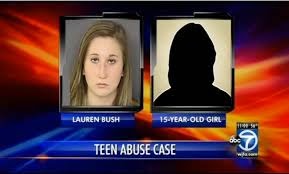
Two Maryland High School Teenage Girls Abuse Autistic Student, One of Their Parents Notifies Police


Two teenage girls in southern Maryland abused and bullied an apparently autistic 16-year-old boy into performing sexual acts and crashing through pond ice in episodes they captured on cellphone video, authorities said Wednesday. The girls, ages 17 and 15, threatened the teen with a knife, kicked him in the groin and dragged him around by his hair according to law enforcement. 

They coerced him into walking on a partially frozen pond and then refused to help him out of the frigid water. Police said the boy got out himself, but the prank could have turned deadly. All three teens attend Chopticon High School in Morganza, MD.

"You're dealing with somebody who doesn't have the mental capacity of you and I," she said. "Somebody like that could go into a kiddie pool and may not be able to get themselves out. That's what's really kind of disturbing to us, among the other allegations in this case. The whole thing's just very disturbing."
She said investigators haven't found any of the video online.

  • The 17-year-old, Lauren A. Bush, of Mechanicsville, MD was charged as an adult Tuesday with first- and second-degree assault, false imprisonment and solicitation for child pornography. She was released on her own recognizance.
  • The 15-year-old was charged as a juvenile with the same offenses and referred to the state Department of Juvenile Services. The sheriff's office didn't release her name.

Police said both girls acknowledged they committed the offenses. They also said the boy's parents told police he is autistic and police described him as having "diminished mental capacity."

HOW DID THEY FIND OUT
PARENT OF ONE OF THE ABUSERS. 

Police learned of what happened from a parent of the younger girl who had seen the video on her daughter's phone. The parent showed it to a sheriff's deputy who works in the school. There is no evidence other students joined the bullying. Police said more charges are likely as investigators list offenses for each episode that authorities say occurred from early December to early February.

A Parent Of One Of The Abusers Contacted Police Because It Was The Right Thing 

Monday, February 3, 2014

The Role of Unions in School Preparedness (Safety, Security, & School Climate)

It does take a school community (a village) to raise, 
educate, nurture, and protect a child. 


     Unions, as a part of that community, are a vital component in that process. The school community encompasses the school administration, faculty, staff support, SRO, students; but also includes parents and guardians; first responders (law enforcement, fire services, emergency medical services); neighborhood and local businesses; school district leadership and staff; unions (teachers, custodian, security, food service); city services (emergency management, transportation, health and human services, etc.), and local elected officials. All of these stakeholders (internal and external) are part of the school preparedness network and must work together. 

     If everyone is involved in school preparedness and any adult in a school might be a "first responder" in a school incident; then the unions that represent them must be integrated into the safety, security, and school climate equation. The school custodian at Sandy Hook Elementary School is credited with warning others about the impending threat and saving lives in the process. 

  • The custodian who performs safety checks on machinery and knows the layout of the facility to advise first responders is critical. 
  • The food service worker who hears a discussion or comment that causes them to be concerned for the welfare of a child or a co-worker can prevent a disaster. 
  • The school security or hall monitor who establishes a professional approachable rapport with students and co-workers is invaluable to the prevention and critical response in any school incident. 
  • The teacher who is in the classroom, hallway, and cafeteria with numerous students sometimes before, during, or after school has a powerful role in the safety and security of the school community. 
  • The above representatives and a union building steward should have a representative role in any school preparedness committee that meets regularly in the building and district.


As difficult as it may be to believe in today's hyper-sensitive school preparedness environment, if a school or district doesn't take school preparedness as seriously as it should, then the unions provide a voice to make the school community safer and more secure. 

If there is a concern brought forward by a worker to a union representative it may be the worker's perception or a reality, either way it needs to be addressed for resolution. So that in the area of safety, security, and school climate there is a common understanding of what is taking place. 

The key is professional collaboration vice an adversarial accusatory relationship between the unions and the school administrative leaders. If student learning in a positive school climate within a safe and secure school environment is our collective goal, then it is important to work together.  Both sides should welcome the opportunity to collaborate to improve things for all.  It is not about blaming each other for mistakes or shortcomings, it is about working together to fix them as soon as possible for the safety and security everyone.


Friday, December 27, 2013

Parents, Guardians, & Counselors Asking Kids About Inappropriate Conduct By Adults


 The Jerry Sandusky / Penn State Child Abuse Cover Up, Steubenville Ohio House Party Rape of a Minor, a former Danbury Gymnastics Coach found guilty of sexual assault against minors in his charge...these are reminders of why anyone (parent, guardian, teacher, etc.) responsible for the safety and security of a minor needs to remind kids of all ages of what is appropriate and what is not. Too often the safety and security of minors is assumed to be taken care of, but it may not be so. Having that discussion with children and especially adolescents (who assume they are grown up) is an important part of prevention. Letting teenagers know what the age of consent means is also important or they maybe convinced or groomed to believe otherwise. 

In the case of Child Predators, these individuals are driven, experienced in gaining access and trust, target kids lacking strong supervision, and often have multiple victims before they are discovered. Guardians of children and teenagers need to trust their instincts to err on the side of caution and make sure NO ONE is performing any inappropriate conduct (touching, speech, nudity). Child Predator Jerry Sandusky took a benign event (have a teenager take a shower after an athletic event) and used that as an opportunity to abuse children.  

PA Grand Jury Transcript Against Jerry Sandusky

TRUST NO ONE WITH YOUR CHILD THAT YOU DO NOT KNOW WELL. EVEN THEN, IT IS OK TO ASK YOUR CHILD IF ANY ADULT HAS EVER DONE ANYTHING INAPPROPRIATE AROUND THEM OR WITH THEM.

Wednesday, August 28, 2013

Furniture Tip Over On Accidents & Kids

For all of the new Moms & Dads and Aunts & Uncles Out There, Educate Yourself About the Danger of Furniture Tip Over Accidents. 


Seven Ways to Prevent Furniture Tip-Over Accidents in Your Home

Furniture and TV tip-over incidents are one of the top hidden hazards in the home. The U.S. Consumer Product Safety Commission (CPSC) encourages you to inspect and anchor furniture and TVs in order to protect young children from a preventable tragedy.
Between 2000 and 2010, the CPSC received reports of 245 tip-over-related deaths, and more than 90 percent involved children 5 and younger. The majority of these children suffered fatal injuries to the head.
You can prevent tip-over accidents by following these safety tips in any home where children live or visit:
  • Anchor furniture to the wall or the floor.
  • Place TVs on sturdy, low bases.
  • Push the TV as far back on the furniture as possible.
  • Keep remote controls, toys, and other items that might attract children off TV stands or furniture.
  • Keep cable cords out of reach of children.
  • Make sure freestanding kitchen ranges and stoves are installed with anti-tip brackets.
  • Supervise children in rooms where these safety tips have not been followed.


Saturday, February 23, 2013

Cyber Safety Videos for Kids (K through 8th Grade)

Michigan's Cyber Safety Initiative

Click on the Above Link to Access the Cyber Safety Videos for Kids.


The state of Michigan has a strong cyber-security program and put together age appropriate videos designed for kids from:


  • Kindergarten to 1st Grade
  • 2nd and 3rd Grade 
  • 4th and 5th Grade
  • 6th through 8th Grade
Discussion: Unfortunately, technology has outpaced most parent's ability to understand it, use it, and safely monitor and supervise their children's use of the Internet and information technology (iPhone, iPads, etc.). Most children spend long hours unsupervised on the Internet...? It has become a virtual "pacifier"and some parent's allow their children to have computer access in their rooms under the guise of privacy. I strongly recommend kids have computer access in an open area where parents can freely move through and view what is going on. Parent's don't need to be defensive in supervising what their kid's are doing on the Internet. Searching the computer's history and putting age appropriate parental controls is important, and the child use needs to be transparent. You should have access to their accounts, passwords, and sites - if not then do not let them use it. (It is a privilege, not a right) One parent said, "if any electronic information comes into my home or leaves out of my home, I have every right to know what it is, and if my child doesn't like it they don't get to use the Internet!" Many parent's act as if it is a child's right to have Internet privacy. The next step is teaching them digital citizenship and cyber safety. This will translate to making them adults who are more aware of Identity Theft and other Cyber threats.


Final Comment: What we teach our student's and kid's about the Internet is what they will take into adulthood. This is how we keep our schools and society safer and more secure.

Monday, December 10, 2012

Student Drownings Generate Safety Standards Review

Student Drownings Generate Review of Safety Standards

Click on the Link Above for the story and the video link below for a remembrance ceremony.


A number of student drowning deaths have generated a review of school safety standards affiliated with students conducting swimming or swim training.

IF THE COMPLETE AND THOROUGH REVIEW OF A STUDENT INJURY OR GOD FORBID DEATH HELPS PREVENT FUTURE INJURY OR DEATHS, THEN THAT UNFORTUNATE INCIDENT HAS A POSITIVE MEANING TOWARDS THE FUTURE. 

Thursday, July 19, 2012

12 Yr Old Boy Dies 4 Days after a Staph Infection Caused By a Scrape in Gym Class


Memorial Website with Info on Staph Infections

My hometown lost a beloved retired teacher who cut himself at home and his cut got infected resulting in his death, similar to the tragedy of Rory Staunton. He was a 12 year old boy, scraped his arm diving for a basketball in gym class, nobody thought much about it. His parents took him to his doctor who diagnosed his problem as a stomach virus that was going around. The doctor told the parents to take him to a nearby hospital to get re-hydrated which they did. They also ran tests on him, but the results came in after he was released. the tests showed his white blood cell count was unusually high. No one from the hospital contacted them. But two days later, the 12-year-old was fighting for his life in a New York City hospital as bacteria from the injury raced through his bloodstream. He died in the intensive care unit. The bacteria and his body’s reaction to it, a condition known as septic shock, killed him. 


Parents Try To Recognize The Signs and Ask The Right Questions:

Because it can be so difficult to diagnose sepsis (toxic shock syndrome) early, parents, the ones who know their kids the best, need to know what to watch out for, Doctor Gaieski said. “If your kid has a scrape it shouldn’t cause a high fever or pain that is out of proportion with the injury — or in a different spot from where the scrape is,” he added. “You should also be concerned if your kid has an unexplained rash, trouble breathing, or a fast respiratory rate or lethargy without typical cold symptoms such as a runny nose, a sore throat or a cough.”

Strongly recommend that parents assume nothing and aggressively pursue the doctor and the hospital to close the loop with them concerning test results. 


Thursday, July 5, 2012

4 Kids Killed by Electricity in 3 Separate Recreation Incidents


Four children were electrocuted in three separate incidents involving routine summer activities. Electricity and water are a deadly combination and kids, parents, guardians, and recreation facility personnel need to pay more attention to this man-made hazard to avoid any more deaths or injuries.  


  • June 28, 2012: An 11 yr old girl, Ashton Jojo, who was vacationing with her family was electrocuted and died at a miniature golf course at at Orange Lake Resort in Kissimmee, Florida. She was electrocuted as she tried to retrieve her ball she hit into a small 2 ft deep pond on the course around 2 pm. She and her family were on vacation from New York.  A man was injured trying to pull her out of the water. The course is closed and an investigation is pending. 
  • July 4, 2012: A 13 yr old girl (Alexandra Anderson) and her 8 yr old brother (Brandon Anderson) were electrocuted and died while swimming near a private dock in the Lake of the Ozarks in Missouri. They could not be revived and were pronounced dead at the hospital. An investigation is pending and they are looking at electricity powered lights and a pump that supplies water to a children's slide used at the dock. 


  • July 4, 2012: One boy (unnamed) was electrocuted and died while swimming between two house boats by a dock near the German Creek Marina on Cherokee Lake in the town of Bean Station, Tennessee. Another boy swimming with him was shocked at the same time but was revived on a medical helicopter flight. Bystanders who tried to rescued them were shocked as well. The marina was evacuated as a precaution afterwards and an investigation is pending as they try to determine the source of the electrical current. The wiring at the bottom of one of the houseboats may be the source, but it is undetermined at present. 
Points for Consideration:
  • All three of these instances are tragedies which will affect the families and communities for a long time.  
  • All of these tragedies could have been avoided with proper installation of electrical devices and safety inspections of recreation facilities and recreation craft.
  • There will be lessons learned but often it takes a tragedy to bring attention to safety issues. 
  • If your children are near water or entering a water environment where there is electricity, these tragedies teach us to  "assume nothing". Often people are embarrassed to ask safety related questions, but that type of engagement helps keep others honest, and may save a life.
  • Electrocution injuries involve a burn as well as a shock. There are special First Aid considerations not discussed in this blog post. Always activate 911 immediately.
  • Rescuing someone who is receiving an ongoing electric shock requires special consideration. First,  try to shut off the source of power. If you are unable to shut off the source of power than try to use a wooden stick (broom handle) or dry material to break the victim away from the source of electricity. If those attempting to rescue and render aid become victims than it makes a bad situation even worse. 

When in doubt, always check the safety (risk management) of whatever activity your children and loved ones participate. As preposterous as checking for the threat of electrocution is during a lake swim or miniature golf, it could have prevented these deaths. Unfortunately, you make your luck when it comes to safety and security of our children.  


Saturday, May 5, 2012

Talk to Students, Staff, and Parents About SUMMER SAFETY

AWARENESS and PREPARATION, (Not Paranoia) KEEPS US SAFE and SECURE 


As the end of the school year approaches, our concern for our students, staff, and families does not. NOW is the time to talk to them about SAFETY and SECURITY prior to school ending for the summer. All of us would admit that having a SAFETY and SECURITY MINDSET should be a year-round philosophy, it often is not. Life's activities get in the way and the daily grind can distract us from apportioning and allocating the proper amount of time to ensuring the one's we care about are safe and secure. THIS IS ALSO A LIFELONG LEARNING CONCEPT that our students (and kids) need to understand if they are to grow up to be aware, caring, and involved adults, citizens, and parents to their own families. Accidents, attacks, and injuries are often the drastic events that occur, shock us, and remind us to stay focused. HOPING your loved ones and students stay safe and secure is not a recommended technique, instead educate them and if necessary train them so they are prepared. Here are just a few discussion points that may be helpful:

SUMMER TIME HAZARDS
  • Swimming and Diving and Surfing
  • Boating (power boat, canoe, kayak)   
  • Lightning
  • Fires
  • Public Bathrooms
  • Cars
  • Extreme sports
  • Not wearing helmets (head injury)
  • Jogging or Walking or Biking alone or with headphones
  • Parties or Dates gone bad

EDUCATION:
  • Calling 911 when someone is hurt or unresponsive. Stay on the phone to give information.
  • Lost kid: Do your kids know what to do if they get lost? Asking a woman is the safest response.
  • Helmet Protection versus Head Injuries: It becomes an inconvenience until it is too late, preventing head or brain injuries from something as simple as falling off of a bike or a skateboard can be a life saver. Kids think it is not "cool" but I tell them look at professional athletes or military folks, they don't do any training without a helmet of some kind.
  • Personal Flotation Devices (PFDs): If you go in a watercraft of any sort, do you wear a personal flotation device (PFD)? Remember sometimes the best swimmer gets knocked unconscious...have you ever tried to keep someone besides yourself afloat...?
  • Stranger Danger: What to do if approached or accosted by a stranger? Be loud, rude, and assertive and be ready to fight (scream, bite, scratch, gouge, kick, etc.)
  • Grown-Up Alone Time with Your Kids: Who has access to your kids, remember most assaults against children (infants, toddlers, teenagers) are by people the family knows, not strangers... be especially aware of those grownups your kids think "are cool or treat them grown up".
  • Travel in Groups: Never go anywhere alone if you can help it, to include going into the bathroom at a public place (store, movies, etc.) Make everyone responsible for everyone else, not just themselves.

TRAINING:
  • Basic First Aid
  • CPR and CPR for an infant  
  • Swimming lessons for non-swimmers
  • Self Defense: What to do if someone tries to grab them.
  • Scenarios Where Grown-ups try to Trick Them: Avoiding being tricked by predators (Can you help me find my puppy? Your mom sent me to pick you up? I am a policeman and  here is my badge...you need to come with me.) Discuss Date Rape scenarios where being drugged, high, or intoxicated at a party can lead to an assault.  

MAKING YOUR CHILDREN AND THEIR FRIENDS AWARE AND EQUIPT WITH SOME STRATEGIES AND SKILLS TO EMPOWER THEM TO BE AWARE OF UNSAFE SITUATIONS AND PROTECT THEMSELVES. AWARENESS OF NATURAL AND MANMADE THREATS TO THEIR SAFETY AND SECURITY IS THE FIRST STEP IN PREPARATION AND AVOIDING THEM IN THE FIRST PLACE.

Monday, January 16, 2012

Freshman Drowns in East Hartford High School Pool during Gym Class


Jan 2012: A 15-year-old freshman student, Marcum Asiamah, drowned during a high school gym class at East Hartford High School. His family said he was excited to learn to swim during his gym class. Adults were present when students saw Marcum at the bottom of the pool. The teacher jumped in and performed CPR until first responders arrived. The teen was rushed to Hartford Hospital but did not survive and was pronounced dead at Hartford Hospital. the autopsy determined he was the victim of an accidental drowning.
Word of the accident spread quickly and many parents for calling their children to make sure they were safe. "A lot of the kids were freaked out and they were starting rumors about it," student Tracy Holmes said. "How do you let that happen?" said Solese Natta, another parent at the school. School Superintendent Mark Zito says the drowning remains under investigation. News 8 even called the CT State Department of Education to ask what the rules are for school's with pools. The representative reached said “They said they will look into this.” Manchester School Superintendent Mark Zito said in a prepared statement:
"Today there was a tragic event at East Hartford High School where a student drowned. The incident is under investigation and we have no findings that we can share with you at this time.  Student safety is of paramount concern and the school district will continue to work with the East Hartford Police Department to investigate this incident.  The pool will remain closed pending this investigation. Our heartfelt sympathy goes out to the family and friends of the student involved in this incident.  The school district is planning to provide grief counseling and support for students, faculty, and staff. The details of that support will be made available shortly."


Students who were at the pool when the incident happened were sent home early. Some other parents elected to pick their children up from school early due to the incident. Superintendent Mark Zito, visited the family's home to offer condolences and a referral to a therapist to help them cope with their loss. Grief counselors were be available for students, faculty and staff at school the next day. A vigil was held two days later on a friday night at 5:30 p.m. so students can come together to remember this young student. At the candlelight vigil, Joshua Dillon, president of the East Hartford High School student council, asked students to speak, and a few accepted, offering prayers and condolences to the family.

Points for Discussion: 
  • Don't wait for a tragedy to occur to determine what are the best safety practices for your facilities, and if there are associated risks, how you can mitigate them to an acceptable level.
  • A swimming pool in your school offers unique opportunities for your students and staff as well as unique risks (drowning, head injuries due to diving, chlorine chemicals, etc.).
  • Are there state department of education guidance or guidelines for pools at educational institutions, if not, why not?
  • Some safety procedures to discuss:
    • In military swim training or waterborne activities, those individuals who are non-swimmers and poor swimmers are identified and handled differently from those who can swim. 
    • Establishing a supervised peer buddy system between students can aid in a student not wandering off or doing their own thing. This is an added layer to existing supervision and increasing student's level of awareness of looking out for each other. 
  • The knee-jerk reaction is to close the pool indefinitely. While this is safest thing to do from a litigious standpoint, more good can be done by teaching children to swim and float to prevent further drownings.   
  • Comment on School Leadership: While not knowing the results of the drowning investigation, I applaud the superintendent actually visiting the family to offer his condolences and support to them. This type of personalized leadership is often unrecognized by people in educational leadership positions due to a lack of leadership education and training, and a fear of litigation.


Sunday, November 27, 2011

SOME SEX OFFENDERS LIVE IN TENTS IN WOODS & WOODED LOTS NEAR OUR NEIGHBORHOODS

Out of sight = Out of mind. An unrecognized national phenomenon is that some sex offenders are living in tents along the outskirts of our communities.


Some sex offenders live in wooded areas, near parkways, behind businesses and office parks, and in wooded lots near our communities. (The above photo is an AP photo of a registered sex offender who lives in a wooded area in Georgia) The focus of this posting is to raise community awareness to this unseen safety concern to the security of our children, families, schools, and communities. As a consequence to their convictions, sex offenders face tough living restrictions as to where they can and cannot live in proximity to institutions where children are concentrated such as schools, day care centers, and public parks. Typically they are restricted from living, working or loitering within 1,000 feet of schools, churches, child-care facilities, and other areas where children gather. Some sex offenders live in the woods as a last resort while others live in wooded areas to remain undetected for nefarious reasons. In some cases law enforcement agencies know where these concentrations are at and probation / parole officers monitor these individuals, but not in all cases. Regardless of their reasons, the American public must be aware of this phenomenon to continue to ensure our children’s safety.


Some Examples:
  •  Winsted CT: Robert Logan (34) a registered sex offender from Arkansas lived in a tent in the woods in Winsted, CT and used promises of candy, ice cream, and money to lure children into his tent (near an apartment complex) to abuse them. He lured a 7 year old girl into his tent and abused her.
  • Waterbury CT: Damien Wells, a 36 yr old unregistered sex offender (federal conviction on child pornography) was found living in a tent in a wooded patch behind a pharmacy on a busy street (Wolcott Street). He was armed with two weapons and ammo.
  • Wooded Sex Offender Camps: Florida (Orlando, Orange County), Georgia (Cobb County), California (Laguna Woods). Just conduct a Google Search.


Points for Discussion:

  • PREPARE YOUR KIDS: Ensure we continue to educate children about “Stranger Danger”. Teaching them to avoid and ignore strangers who try to engage them, and to make noise if the stranger doesn’t get the hint.
    • We used to teach our child to scream / yell “GET AWAY FROM ME STRANGER!!!”
    • Role play these stranger danger scenarios (Help me look for my lost puppy, Your mom got hurt & you need to come with me to see her, I am lost can you help me) with your child to include their actions and responses.
    • Remind them to maintain a distance from strangers especially in cars and run away screaming if encountered. The goal is to empower & prepare them, not to live in fear.
  • INAPPROPRIATE TOUCHING: Continue to educate them to not allow anyone to include people (relatives, neighbors, coaches, teachers, etc.) they know to “touch their bodies”. Always teach your kids to tell you (NO MATTER WHAT) if this happens to them, it makes them brave and is not their fault it happened.
  • PREDATORS ARE HUNTERS: Remember child sexual predators / sexual predators are skilled hunters who know how to find, target, manipulate, control, and intimidate their victims. They will often tell the victimized child they will "kill their mommy & daddy if they tell anyone".
  • SEE SOMETHING, SAY SOMETHING: Children like to explore especially in the woods. Ensure you tell your children to tell you if they ever see grown-ups living in the woods or tents in areas where they travel or play to let you or a grown up know immediately.
  • PROTECT THEIR INNOCENCE: Telling your children their are bad people in this world who do bad things does not take away their innocence, but can protect it.
AWARENESS OF WHAT BAD THINGS CAN HAPPEN IS OFTEN THE BEST MEANS OF PREVENTING THOSE BAD THINGS FROM HAPPENING IN THE FIRST PLACE.


Sunday, November 13, 2011

Kid’s Report School Bus Driver Who Is Driving Erratically Due to High BAC.

SEE SOMETHING, HEAR SOMETHING = SAY / DO SOMETHING: Kid’s Report School Bus Driver Who Is Driving Erratically Due to High Blood Alcohol Level.   


WESTAMPTON TOWNSHIP, N.J. -- A female bus driver in NJ was arrested on Driving Under the Influence (DUI) charges after the school children she was taking home called their parents to complain about her driving. Nervous students contacted their parents after Carole Crockett allegedly was seen falling asleep behind the wheel and swerving the bus she was driving in Westampton Township. The parents called 911, and police caught up with the bus at Holly Hills School, while she was trying to pick up more students. The 46 year old bus driver’s blood alcohol level was found to be .25 percent -- more than three times the legal limit of .08 percent. She faces 25 counts of driving under the influence with a minor and child endangerment. Bail was set at $10,000 for the disorderly conduct offense. Superior Court judge Michael Haas set bail on the endangering charges at $75,000. The driver was released after posting bail and her next court date is Nov. 17.

Points For Discussion:
  • These students should be praised for their intelligent and morally responsible act of calling their parents when they saw something wrong and dangerous to themselves and others.
  • One Critique in An Effort To Be Even More Prepared In The Future. Teach children to contact 911 FIRST when there is danger, an immediate serious safety threat, or an injury and THEN call their parents. Activating 911 first can save lives if their is an imminent safety threat or medical injury.
  • Make a public example of these students for doing the right thing and protecting the safety and security of each other. Recognize them at a school function, PTO meeting, and have a local news article to be written about them.
  • Energize the community to always OBSERVE school bus driving performance as they go about their day and to REPORT if they see a distracted school or unsafe (swerving, going thru a traffic light, etc.) bus driver.
  • Positive Use of a Student's Cell Phone / Electronic Device: I am not a fan of allowing students to visibly display or liberally use a cell phone /iPhone during the school day
    (topic of a future post), but this is exactly why students should have the means to communicate if things are unsafe or they need help at anytime
EVERYONE (Students, Teachers, Parents, Administration, Workers, Delivery personnel, neighbors, citizens) all have a ongoing role in school preparedness. These student's got it right and prevented disaster.

Sunday, October 16, 2011

Mexican Cartels Recruiting American High School Students Part I

“Mexican Cartels have corrupted nearly an entire generation of youth living in Northern Mexico and they seek to corrupt our youth as well to further their smuggling operations,” said Steven C. McCraw, DPS Director. “The Mexican Cartels value American (Texas) teenagers for their ability to serve as expendable labor in many different roles and they have unlimited resources to recruit our children.”

Here is a warning for parents about a disturbing new trend. Mexican Drug cartels are seeking younger and younger recruits, and they're finding them in American schools, at present in Texas. Six of the seven Mexican cartels have established command and control networks in Texas. The link between Mexican Drug Cartels and gangs which help promote and sell drugs is apparent. There are thousands of potential candidates for cartel recruitment in Houston area schools. They include kids who are U.S. citizens, speak Spanish and can blend in on both sides of the border. The DPS says parents should pay attention to who their kids are hanging out with since recruiters may not be who you might think. "The people recruiting them may not be much older, maybe a 16 or 17-year-old, but they're tracking them down, talking to them, telling them how glamorous it is to deal and traffic drugs," said Commander Steen.
A couple of incidents within the last 30 days prompted the warning, but the increased threat began a few years ago. Here are some examples:

  • Elisabeth Mandala (an American 18 yr old) left Kempner High School in Sugar Land for Mexico. She wound up beaten to death in a pick up truck along with two men carrying fake identification. It's believed the violent drug cartels recruited Mandala to smuggle undocumented immigrants across the border.
  • Just last week in a border county officers caught a 12-year-old American boy driving a stolen pick up truck with more than 800 pounds of marijuana.
  • Last month two Texas teens were lured to Mexico where they were kidnapped, beaten, ransomed and released in a remote area along the Rio Grande River.
  • Within the past year, more than 25 juveniles have been arrested for drug trafficking in one Texas border county alone.

"The cartel influence is here," said Duane Steen, regional commander for the Texas Department of Public Safety. The DPS is warning parents across the state that children are at risk of being seduced by the cartels that seem to be stepping up their game. "Sometimes this may be delivering drugs. It may be crossing drugs over from Mexico or involvement in some of the other violent activities," said Steen.

"Recruiting is easy for such a vulnerable population," said Kim Ogg, the former gang task force director for the city of Houston. Ogg suspects the cartels are recruiting through gangs. "Some see it (the gang) as their family. Some are attracted to the money, drugs, guns, women, and others are attracted because they have family members in gangs and it seems normal," said Ogg. What the cartels won't tell recruits is how it all could end with jail, injury or death.

As the Hispanic and Latino demographic in America and our schools increase, we must remain vigilant against the impact of Mexican and Latin American cartels and groups, drugs and gangs in our communities, schools, and population. All Drug Cartels from Mexico or anywhere else are a national security problem and threaten the safety and security of our schools as well. We must protect our children.


SIMILAR TO MUSLIM EXTREMIST GROUPS THE LEVEL OF INDISCRIMINATE AND TARGETED VIOLENCE (Beheading, Public Burnings, Body Parts Publicly Displayed, Families Slaughtered, etc.) FROM DRUG CARTELS IS DIFFICULT FOR THE AVERAGE AMERICAN CITIZEN TO COMPREHEND.


Saturday, September 3, 2011

Follow Up To Yale Student's Death In Lab: OSHA Findings


On a previous School Preparedness Blog entry in April 2011, I posted information about student Michele Dufault's death from strangulation from a lab machine (a lathe) during late night work by herself in a Yale lab. The US Occupational Safety and Health Administration (OSHA) recently completed its investigation. Yale University was not fined for this accidental student death by OSHA since it (OSHA) only has jurisdiction over worker safety, not student safety. OSHA released its finding from its review of the student's fatal accident. A synopsis of the OSHA finding are as follows:
  • The lathe was built in 1962 which had no emergency stop button or safety guard on its lead screw (chuck) which the graduating senior's long hair was caught.
  • No warning signs or safety rules posted in the laboratory's machine shop.
  • The student who was killed should have been monitored by a second person.
  • Her hair was not pulled back which contributed to her accidental death.
  • The university failed to monitor the student's work and adherence to safety regulations which she was briefed upon.


Yale University's response to the accident / OSHA assessment: Stated it provided the student extensive machine tool training and personal protective equipment (PPE) and student's were instructed not to use machinery without anyone else present. Yale University states "...unfortunately, OSHAs assessment contains a number of significant inaccuracies." Since the accident, Yale stepped up its safety training program and limited the access to the machine shop to certain hours where monitors are present.

Points for Consideration:
  • As stated in our past related blog, a TWO PERSON RULE should always be in place when machine are used especially by students. Moving parts, electricity, fuel, and fumes can all individually or collectively injure and kill people so be careful.
  • Often times when we inherit equipment or renuvate facilities, we are pleased to economize or are satisfied we have equipment which still works which is good. However, educational leadership always has to ASSESS the HAZARDS that may occur or exist because something may not be up to present day safety codes and regulations.
  • Your school can have the greatest safety policies, and education and training program; but if your school does not ENFORCE safety through SUPERVISION then human mistakes creep into the occassion as will accidents and possibly death. As we say in the military when it comes to leadership, "SUPERVISION is the most important part of leading others."
    • Policies without supervised enforcement hold little weight in the real world.
  • Investigations and lawsuits due to liability will follow soon after, this is where PREVENTION should always be the focus.
  • It is always better for a educational institution to catch a safety violater and counsel or fine them prior to an accident vice having the institution having to defend why a student was accidentally killed with their equipment on your school's grounds.
  • For accidents to occur their is a link between a number of factors (natural and manmade) that link together and form a consequence chain which lead to injuries and sometimes even death.
Part of teaching our students and reminding our educators to be successful in life is to remain SAFE and SECURE, these are enduring Life skills.